Index
- Dam Lies
- Be Shown Yourself
- Feet of Play
- Blood Sugar Checks Magic
- ‘I Know That I Can Do This!’
- And That’s an Order!
Dam Lies
There’s a river called Truth. It runs through a town called Milyfe. Ei lives in Milyfe.
Usually the Truth runs clear. The people in Milyfe can observe the Truth and see all the good and bad things floating or living on or in it: Leaves, branches, fish, rubbish, pollution, etc. No object can be removed from the Truth until the Truth flows out to the sea, far beyond Milyfe.
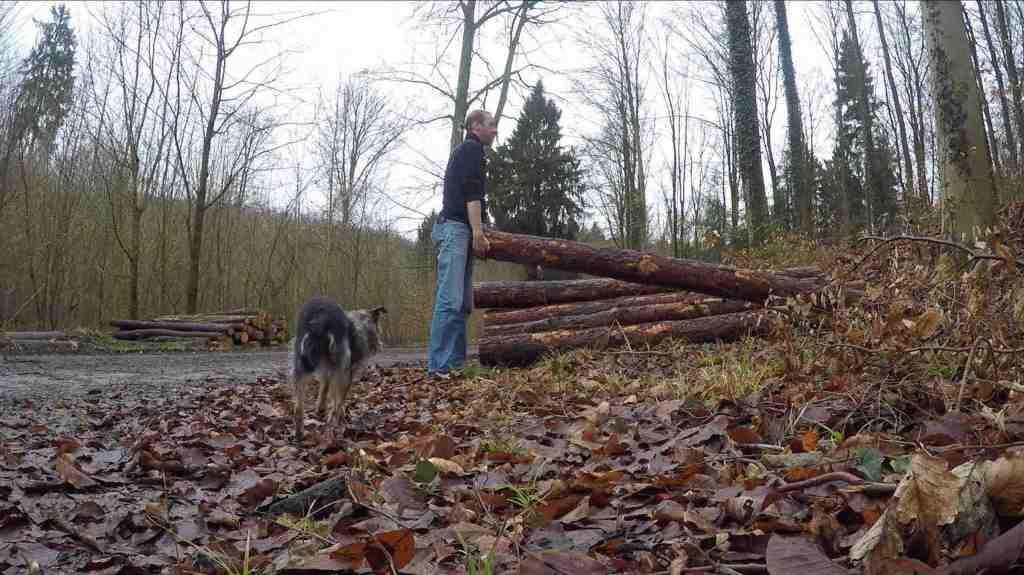
One day, Ei was walking along the Truth in the forest upstream of Milyfe when Ei dropped a bad thing into the Truth that Ei didn’t want the people in Milyfe to see. Acting quickly, Ei ran downstream of the thing and stopped it from travelling further by throwing a log across the Truth. Of course, the flow of the Truth was also blocked, but only temporarily. After a short time, the water rose sufficiently to flow over the log again. But the thing sunk and remained stuck behind the log.
Ei was greatly relieved. Ei also realised however that in order to prevent the people in Milyfe from seeing the thing, the log would have to remain there. ‘There it must lie’, Ei thought. ‘I shall call this wonderful log a Lie.’
The trouble was that other things also got stuck behind the Lie. Things that the people in Milyfe expected to see. The only way to hold the thing back while letting others through was to use more Lies to build a more complex dam. The resulting trouble was that the Truth behind the Lies became ever higher, and Ei realised that if Ei ever removed the Lies, the Truth would flow higher into Milyfe, possibly causing damage to the town and its people. Therefore Ei felt trapped into adding ever more Lies with ever greater complexity to allow the Truth to flow, as though unimpeded.
So the Lies required ever more management. Sometimes they would become dislodged or break. This could be caused by simple wear-and-tear, or by other things flowing along the Truth, and Ei would have to do some quick thinking and building to prevent a disaster. Keeping track of the placement and condition of each Lie became a stressful full-time job. When Ei inevitably made a mistake, the people in Milyfe would notice something unusual happening in the Truth: More branches or leaves; An unusually high or low level; Silt obscuring the fish. However, as long as Ei acted quickly, the people in Milyfe didn’t bother to investigate the small anomalies, and continued with their lives as usual.
Finally Ei realised that there was no ideal time to let the Truth flow freely again. Despite everything, there was a limited supply of logs that could be used for Lies, and the supply, like Ei, would eventually be exhausted. After that, the dam would break and send a wall of Truth crashing down on Milyfe. So it was only a matter of time before all of the Truth reached Milyfe. There was nothing Ei or anyone else could do to prevent this. The only variables Ei had any control over was when the Lies would be revealed, who would reveal them, and how. So Ei finally concluded, though the thought sickened him, that Ei should invite all the people from Milyfe up to the dam to see the Truth for what it really was. Then with the people on higher ground, Ei could destroy the dam, revealing all the Lies, and the people at least could be spared from the surging wall of water and debris…
Ei stood on the bank of the Truth, with the people in Milyfe, surveying the damage, which his good friends reassured him was repairable. Shaking his head, Ei said quietly to himself, ‘I can’t believe how devastating the Truth has been to the people in Milyfe. A resident called Clear-Lee who happened to be standing nearby, overheard Ei. ‘We have and always will survive the Truth’, Clear-Lee said. ‘Anyway, it wasn’t the water that did the damage. It was the logs.’
— 2017
Be Shown Yourself

If you ignore the heat, you may not only feel more the warmth, but also be shown more light;
If you ignore the damp, you may not only feel more the rain, but also be offered more rainbows;
If you do not listen to the noise, you may not only hear more the music, but also be played sweeter melodies;
If you give no credit to the subtext, you may not only discover more truth, but also be told fewer lies;
If you give hate no power, you may not only feel less the fear, but also be shown more love;
If you tell your truths, you may not only release your burdens, but also be granted your freedom.
— February 2020
Feet of Play
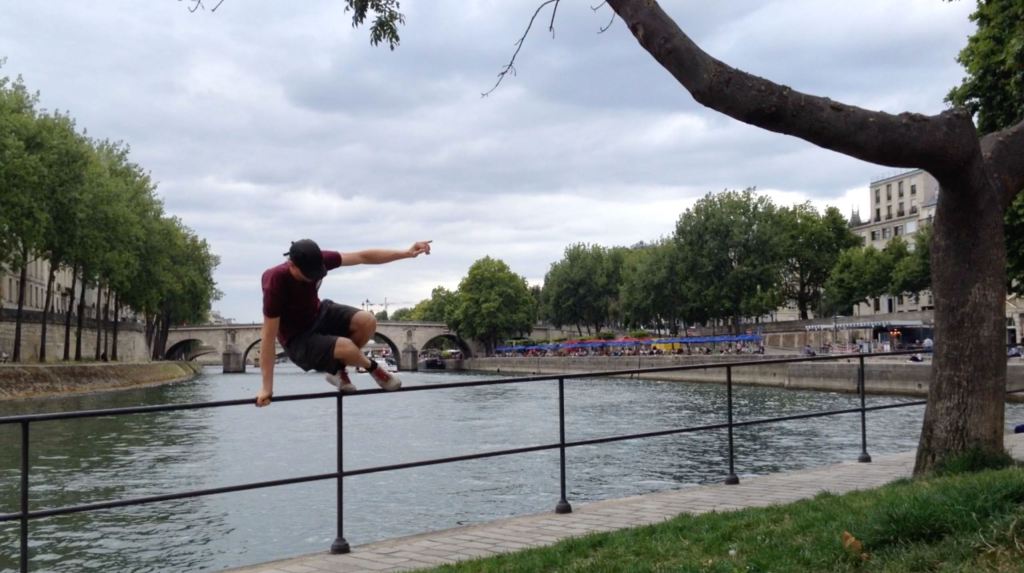
I once heard this great question asked: [Paraphrased] What is your ideal parkour?
It was asked of Chris ‘Blane’ Rowat by a practitioner at the national parkour gathering in Perth, at which Blane and Shirley Darlington from the UK were special guests. The question as I remember and interpret it can be expanded as follows: What are you striving for in your training… What is the goal in terms of physical movement… What does it look and feel like when performed at the highest level personally attainable?
To mitigate the risk of misquoting Blane, I will loosely paraphrase his answer, as my memory and interpretation allow: It is moving quickly, smoothly and with confidence across any obstacles that happen to be in the path, with no hesitation as to the appropriate movements to be performed.
I remembered that question and answer after I realised something with my own training experience recently.
Firstly, some context: I have been training movement disciplines, mostly parkour and Art du Deplacement, for what feels like a not-insignificant period of time. This ‘training’ has included physical training, research, collaboration, learning, teaching, personal interaction, play, and maybe some other things described by long’ish words that sound cool.
My realisation:
I was teaching at the time, and I felt energetic and confident in my movements. That is, I felt like I had at least enough energy, if not more, to perform any required movement. And I felt like I had at least enough clarity of mind and coordination to execute the desired movements skilfully, if not masterfully. I realised that despite my history of training, I have experienced this feeling only sporadically. Often training feels more akin to moving through treacle, or as if every obstacle is like an iceberg, where the visible portion pales in comparison to the invisible aspects such as fatigue, fear of injury, inadequacy, and maybe some other things described by long’ish words that sound like a bit of a drag… Like having feet of clay.
Note: I am referring mostly to the feeling experienced during training, not necessarily the actual performance of movements. That is, I haven’t always been stumbling around like a blindfolded, intoxicated newborn antelope with its umbilical cord wrapped around its hooves for the last couple of years… not always anyway. 🙂
So then I asked myself: What is that elusive good feeling? Hmm, I did have a weak cappuccino for lunch, haha! Anyway, whatever causes it, I wanted to understand it. How can it be defined, isolated? What is my ideal movement? This is my highly-distilled answer: It is feeling light on my feet. What does it mean to be ‘light on ones feet’? For me it means having an abundance of physical, mental and emotional energy, facilitating precise application of appropriate power, readiness and enthusiasm for the next obstacle. What does it mean to be ready and enthusiastic for the next obstacle? It means that I am aware of my abilities and am ready and willing to use those abilities to approach obstacles with confidence and a playful attitude. That is, fully understanding my strengths and how to apply them, rather than focussing on my weaknesses and how they limit me.
I think that these ideals, when realised, regardless of comparative ability, can manifest in feeling literally light on ones feet.
Therefore, rather than always striving to acquire new skills or refine existing skills in the skillset, occasionally, I want to acknowledge and understand the skills that I have already acquired and refined through previous hard work… And then allow myself the freedom to go out and play with them.
Note: This is a vast subject which has no doubt been addressed by others in more depth, probably more eloquently… but with fewer excellent jokes! And maybe I haven’t said anything particularly new. However as always, may sharing my particular perspective help someone else in some small way. 🙂
— October 2020
Blood Sugar Checks Magic
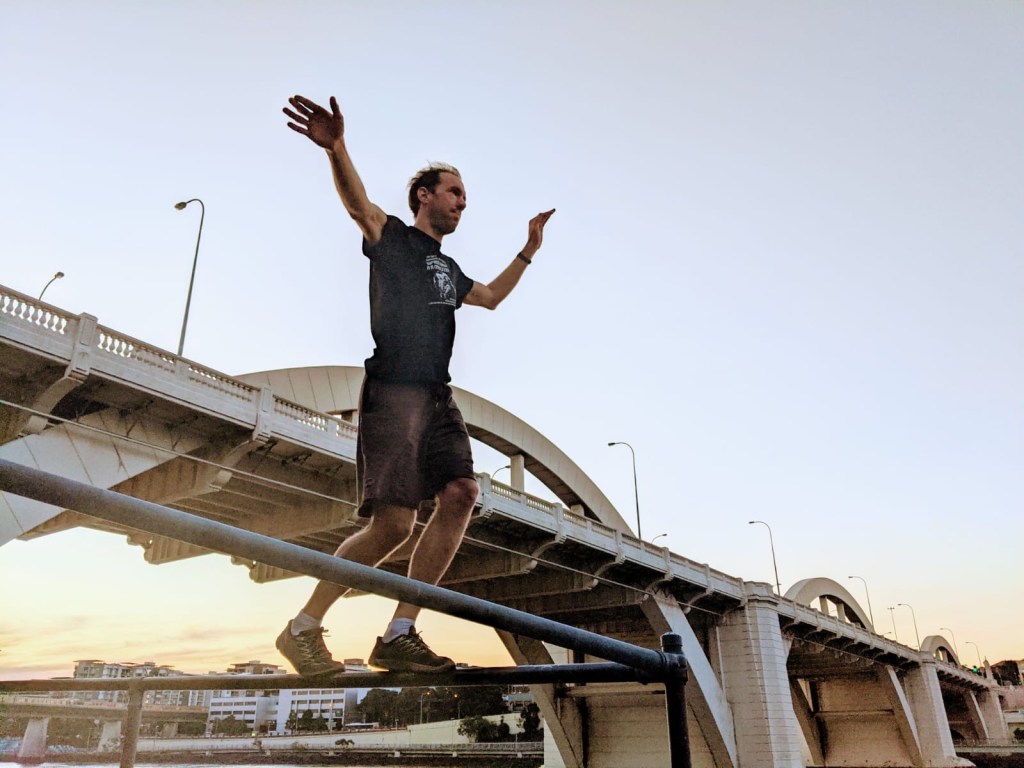
In late 2020, partly inspired by the whirlwind of pervasive change and introspection triggered by the COVID-19 pandemic, I had the privilege of appearing on a podcast for the first time. The podcast is part of Movers Mindset, a project created by the inquisitive, perceptive and wonderful Craig Constantine.
Craig and I met while participating in parkour/Art du Deplacement workshops in Europe. Aside from that, I think that the podcast covers other relevant background information nicely… So you’ll have to listen to it if you want to know more! 🙂
To me, the experience was altogether enjoyable and rewarding, and I thank Craig and the Movers Mindset team for both the interview experience and the resulting published content. As alluded to in the podcast, my aim was to inspire and/or help others by sharing experiences, ideas and stories from a particular perspective — An insulin-challenged parkour/ADD practitioner.
Link to the landing page for the podcast episode
— March 2021
‘I Know That I Can Do This!’
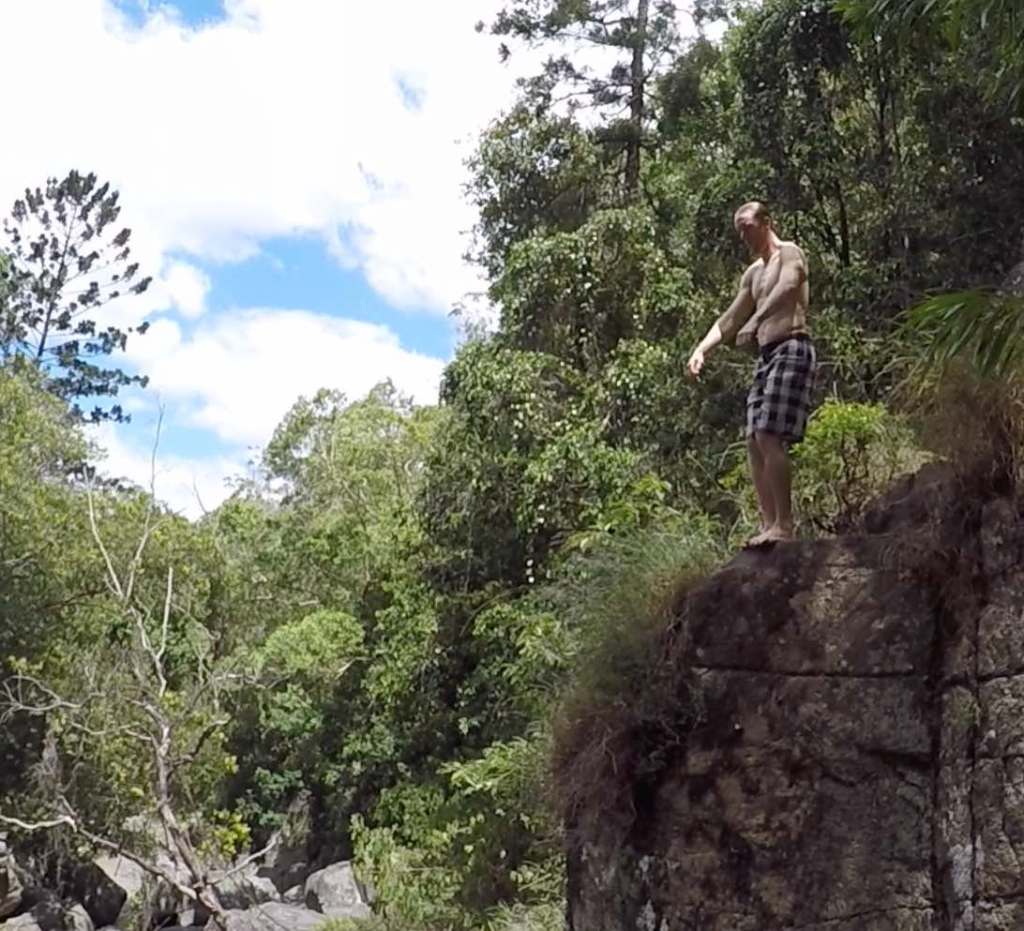
The above statement is classic in the world of parkour training. It is most often uttered by a practitioner before they have done the ‘this’. I say ‘classic’, because I have heard many people with whom I’ve been training say it, and I have said and/or thought it, more than once. So what’s the problem with it? We all know what it means, right? Maybe we don’t really…
Until I do it, I don’t know that I can do it… And that’s okay.
Disregarding unanticipated external factors (e.g. A loud noise; A bird flying into your face; The sudden appearance of your favourite snack), to successfully perform a movement in parkour, and many other disciplines, we require:
- Our body to perform certain physical actions effectively.
- Our mind to effectively initiate, control and coordinate our bodies’ actions.
Neither of these two factors can be absent. Without either one, we will not complete the movement. Why then do we attribute so much importance to the physical and/or downplay the mental aspect so readily?
‘But I’m not downplaying the mental aspect. I’m just saying that I can do it physically, but my mind isn’t playing ball.’
Okay, but not really. If I know that my washing machine isn’t adding water to the drum, no amount of fixating on the fact that it can spin the drum at 10 billion rpm is going to get my clothes clean. The fact that there’s a water issue has to be acknowledged as an essential factor, and treated as such… With respect and compassion.
Launderological analogies aside, I think that my core problem with the statement in question is this:
Telling myself that I know that I can do something before I do it, sets me up to feel inadequate, deficient, incompetent, etc. That is, in telling myself that I know that I can do something (today… Now!), heavily implies that if I don’t do it (today… Now!) I have failed in a fundamental sense to do that which is obviously something that is possible for me to do.
But, if we take to be true the statement of equal importance of the physical and mental factors, then this implication is false. Do I feel inadequate, deficient or incompetent when I back away from a six metre high wall run? No. Why? Because I know that it is not physically possible for me to do it. So then why should I feel any differently about any other factor that prevents me from performing an action? If the wall is too high, then it is too high. If my mind is not up to the task, today… now, then it is not up to the task.
Are there tools and methods to help with progressing physical strength, mobility and coordination over time? Yes.
Are there tools and methods to help with progressing understanding, discernment, mental fortitude and adaptability over time? Yes.
Does progressing with physical strength, mobility and coordination over time mean that I should feel inadequate if after years of training I’m still not physically capable of performing a six metre high wall run. I don’t think so.
Does progressing with understanding, discernment, mental fortitude and adaptability over time mean that I should feel inadequate if after years of training my mind ‘won’t play ball’ in this moment. I don’t think so.
To summarise, if you catch yourself thinking/saying, ‘I know that I can do this’, before you have done it, here’s one approach to take that I recommend:
- Acknowledge the thought/statement.
- Ask yourself whether any implications are being raised by the thought/statement and what those implications are.
- If any of those implications do not serve you (e.g. If I don’t do this now, it means that I’m ‘this’ or I’m ’that’), then make a new statement that serves you.
For example: I understand that my mind is encountering unfamiliar/difficult ’terrain’, and that it will take analysis, practice and time to overcome. If it doesn’t happen today, then the unfamiliarity/difficulty is greater than first thought… Today, the ‘wall’ is too high. It’s not a negative reflection on me as a practitioner, in the same way that the height of an actual wall is not a negative reflection on me as a practitioner. How I interact with the ‘wall’ and address the height of the ‘wall’, however, may well be a reflection of the quality of my practice. - Understand that progress is not linear. We make progress with every conscious encounter.
— February 2022
And That’s an Order!
The scene: A ubiquitous sandwich place
[General salutations]
…
Attendant: What can I get you?
Me: Can I have a foot-long with egg and cheese please [the most value-for-money option]?
Attendant: Hmm no sorry, we’re out of eggs.
Me: Okay then, can I have it with seafood [the next most value-for-money option]?
Attendant: Oh, actually we’re out of seafood too, sorry.
Me: Okaaay then… Can I have it with… ‘filling blah’ [the next, next most value-for-money option]?
Attendant: Okay we can do that.
Me: Hooray!
Attendant: What salads would you like with it?
Me: No lettuce, but everything else…
And don’t tell me that you’re out of ‘No Lettuce’!!!
— October 2022

